Pilbara Airspace Review
AusALPA provided a submission to the CASA consultation on the suitability of the Flight Information Services (FIS) in the Pilbara region. The obvious input is that both comms and surveillance are woefully inadequate but we also noted the typical workload factors so to help paint a more comprehensive picture of what the lack of FIS does to operational safety and efficiency in this airspace. These factors also make it more difficult to comply with the slot time back in Perth too, which has been something that is more strictly being monitored during 2025 and beyond.
CASA provided a Summary of Consultation, including inputs from stakeholders that have allowed open access to their input. Generally stakeholder input was:
- the current FIS is inadequate and often falls below reasonable performance expectations
- deficiencies in VHF coverage, and reliance on HF as the primary fallback, affect pilots’ ability to obtain timely, accurate information
- these limitations increase pilot cognitive workload, particularly during departure, arrival, adverse weather, or periods of high traffic complexity
- communication constraints at lower altitudes reduce situational awareness and may lead to increased operational risk.
We expect CASA to take steps to improve FIS in Pilbara region. We will monitor what this will look like, including the number and locations of the comms and surveillance infrastructure.
Sydney basin and Western Sydney International (WSI)
AusALPA continues to participate in meetings and consultations for the redesign of the airspace and flight path procedures for the Sydney basin. The redesign of this airspace likely constitutes the most significant airspace redesign Australia has seen in decades.
The WSI airport and airspace changes will go live on July 9. The introduction of this airport and the associated changes were one of the key issues behind the decision for the AIRAC date to be pushed back a month.
One of the more significant aspects of WSI will be that it will host the first Digital Aerodrome Services (DAS) in Australia. ATC will be provided from an off sight location and the challenges associated with this new service type have not been without challenges and there will likely be some unresolved aspects, which will mean that some ability to function at “normal’ level of service provision will mean that the airport will effectively be operating in reduced capacity for an interim period. WSI will be freight only ops for a few months. WSI airport are expecting the first pax carrying operations in October however this remains to be seen.
ILS flight testing will be required before the two WSI ILSs can be used, with the possibility of a TRA to facilitate this work.
Ballina Control Zone
The control zone for the Ballina airport is on track for commencement on July 9, which is the mid-year AIRAC date for 2026. AusALPA was a key stakeholder in driving for the introduction of this new controlled airspace, and we have participated in many consultations for the flight paths and airspace design too. Advocacy can take time but we’re pleased that our work in this area is finally coming to fruition.
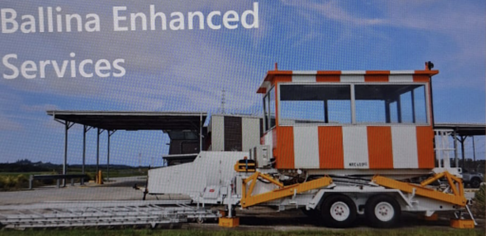
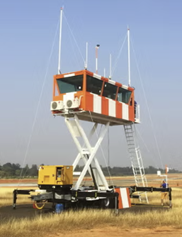
The below pictures are the intended tower installation for this CTA, which is obviously a mobile type tower but the location of its placement has been the subject of detailed discussions. There are no current indications for when it would be replaced with something more permanent.
AFAF - The Australian Future Airspace Framework
This CASA working group is progressing the vision of policy for airspace use, and a key aim is to move from risk mitigation of segregation of RPAS/UAV from crewed aircraft towards integration. The challenges of how to integrate these diverse types of operations with the aircraft we operate has many nuanced challenges, tech solutions, human factors considerations etc.
AusALPA provided some key inputs for the group to consider - We essentially focused on the goal of integration by structuring our thinking and inputs around how the various types of airspace classification/use affect the opportunities and challenges:
- OCTA (e.g. the need to move away from see-and-avoid as a risk solution)
- OCTA and CTA common factors
- CTA (unique only to CTA)
- Abv FL600; and
- Segregated airspace use, such as PRD. E.g. some special use airspace will largely remain with segregation as the solution with limited opportunity for integration.
Electronic Conspicuity (EC), is a key aspect we factored in when discussing what are enablers/opportunities to that and or alternatively, disablers/challenges.
Hobart Airspace IFPs
Airservices recently did a review of some of the flight path procedures for Hobart. AusALPA provided some input based on the operational experience of reps and members who operate there. Our input has helped lead to these initial changes:
- Lowering of the MSA to the south to enable a lower IAF altitude at PIDOS (from current MSA of 4000 ft to 3600 ft) on the RNP-Z approach (LNAV only).
- Introduction of a new procedure (RNP-Y, LNAV/VNAV only) that will include the lowering of the MSA and IAF as above, but will also provide vertical guidance to the threshold.